
Future-Proofing Beauty
A Strategic Guide to Navigating the PPWR and Sustainable Packaging
The era of "voluntary" sustainability is over. For cosmetic brands, packaging is no longer just a branding tool; it is now a high-stakes compliance requirement.
Driven by the EU Packaging and Packaging Waste Regulation (PPWR), the UK’s Plastic Packaging Tax, and shifting Extended Producer Responsibility (EPR) frameworks, the industry is moving toward a mandatory circular economy. These regulations don't just ask for "greener" choices; they mandate improved recyclability, strict waste reduction, and transparent labelling across the entire life cycle.
As these regulatory developments will inevitably lead to stronger enforcement and greater alignment across markets, packaging decisions made now directly impact compliance, costs, and brand positioning over the coming years.
At Bloom, we specialise in turning these regulatory hurdles into competitive advantages, helping your brand transition from policy understanding to practical implementation.

For more details on specific aspects of PPWR, such as substances of concern, recyclability, recycled content, packaging minimisation, sorting labels, and technical documentation, please refer to our dedicated PPWR article series.
This article highlights the key priorities and tangible steps cosmetic brands should keep in mind when designing and modifying packaging to meet these demanding new requirements. We’ll focus on three key priorities:
Packaging minimisation: reducing excess packaging and space
Use of recyclable components
Use of recycled content
Minimisation: Less is More

Reducing excessive packaging is no longer just about aesthetics; it’s about supply chain efficiency and cost mitigation. Under the new regimes, "empty space" is both non-compliant and a financial liability.
Key Actions for Brands:
Remove unnecessary layers of packaging. Audit your packaging to identify unnecessary caps, sleeves, inserts, etc.
Design compact packaging with minimal empty space
Offer refillable or reusable packaging formats
Explore alternative formats, such as solid or concentrated formulations (e.g. bar shampoos instead of liquids), which may require less packaging either by weight or volume.
Not sure where to start? We can provide ‘red flag’ packaging audits to identify material reduction opportunities that maintain premium shelf appeal while helping you meet your sustainability goals.
Designing for True Recyclability
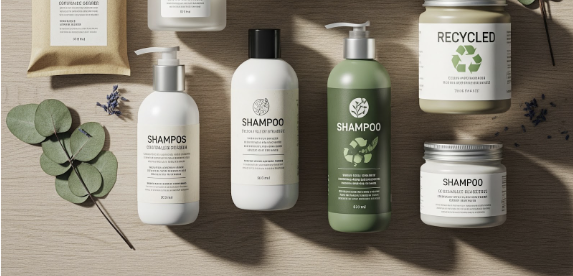
There has been a rapid shift towards recyclable, reusable, and compostable packaging, accelerated by upcoming PPWR recyclability requirements and deadlines. The most common, and the PPWR priority, is recyclability. But a material being "theoretically" recyclable is no longer enough. The PPWR demands that packaging be effectively collected, sorted, and recycled at scale.
Brands should prioritise:
Mono-material packaging, which increases the likelihood of recovery
Materials that are widely accepted in existing recycling systems
Designs that reduce contamination and allow efficient sorting
As EPR systems develop, we can expect that rewards (e.g. discounts, lower charges) will be available in respect of packaging that will remain part of the circular economy (e.g. recyclable) rather than ending up as waste. Conversely, we can also expect higher charges for difficult-to-recycle and problematic materials: a system designed to encourage radical change in how the manufacturers of consumer goods approach packaging choices.
We are helping brands navigate the "Recyclability Gap." Our team is monitoring the implementing rules for recyclability as they become available (anticipated during 2026) to help "Design for Recycling" practices as early as possible.
The PCR Challenge: Safety vs. Sustainability
The new rules introduced by the PPWR aim to reduce reliance on virgin plastics. By January 2030, the PPWR mandates a minimum of 30% recycled content for PET and 10% for other plastics (from post-consumer waste collected and processed within the EU or in countries with equivalent standards). These targets climb even higher by 2040.
While environmentally driven, they present significant challenges for industries like cosmetics, where product safety and stability are critical.
However, for the beauty industry, this presents a unique challenge: Safety. Much of the Post-Consumer Recycled (PCR) plastic contains (unknown) impurities and contaminants, making it difficult to guarantee product quality and safety if migration could occur.
How to close the gap:
Identify impurities through targeted and non-targeted testing
Conduct toxicological exposure assessments
Apply established safety principles based on product use and absorption
Secure high-quality PCR streams early to avoid the inevitable supply shortage as deadlines approach
If you’re looking to start utilising PCR plastics in your portfolio, we can help you navigate the journey to ensuring a safe product for the consumer.
Beyond Compliance: The Power of Certification
Third-party certifications such as B Corp or Cradle to Cradle can help strengthen a brand’s sustainability commitments.
While these are not a regulatory requirement, these certifications help to:
Demonstrate commitment to environmental and social responsibility
Build consumer trust
Support brand differentiation in a competitive market
If you’re finding the certification process confusing, we can help guide you through the requests and feedback you receive from your certification body.
In Summary: Proactive Beats Reactive
Sustainable packaging is no longer optional or an innovation project, but it is becoming both a regulatory requirement and a consumer expectation.
By focusing on reducing packaging volume, improving recyclability, understanding EPR cost implications, and enhancing transparency, cosmetic brands can better prepare for evolving regulations such as the PPWR and ensure they meet their own sustainability goals.
Taking a proactive approach to packaging design will not only support compliance but also help reduce environmental impact, manage costs, and strengthen brand positioning in an increasingly sustainability-driven market.
Don’t navigate the transition alone. Whether you need a packaging audit, help with technical documentation, or a strategy to meet PPWR deadlines, we can help.
Sayali Garud & Amanda Isom