
Influencers and Advertising Rules
What influencers and brands need to know about compliant social media advertising
When social media first emerged in the early 2000s, its primary purpose was to connect people across the globe. It is unlikely that its founders imagined it would evolve into one of the world’s most powerful advertising platforms. At the time, very few of us would have been familiar with the term ‘influencer’, a word that has since earned its place in the Oxford Dictionary.
Today, influencers play a major role in shaping opinions, trends, and purchasing decisions, and the cosmetics industry has become one of the most visible examples of this shift. Influencers have become a crucial bridge between cosmetic brands and consumers. Whether nano, micro, or macro influencers, creators offer brands direct access to highly engaged and often niche audiences. This is particularly significant in the cosmetics industry, where purchasing decisions are frequently influenced by reviews, demonstrations, before-and-after results, and perceived expertise.
In recent years, the influencer culture in the cosmetic industry has expanded beyond traditional beauty bloggers and content creators. Doctors, dermatologists, aesthetic practitioners, and cosmetic scientists are increasingly building large online followings, using social media to educate audiences on skincare, ingredients, and product efficacy. Their professional expertise may give their content added credibility, meaning followers may place a high level of trust in their recommendations. As a result, these professionals now occupy a powerful position within the influencer marketing ecosystem.
The rapid growth of influencer marketing is driven by trust, accessibility, and targeted reach. Influencers allow brands to communicate product benefits in relatable and creative ways that traditional advertising may struggle to achieve. Increasingly, cosmetic brands are going beyond sponsored posts and are collaborating directly with influencers to co-create products, ranges, and limited editions. These collaborations further blur the line between independent opinion and commercial promotion, making transparency even more important and adds a layer of responsibility onto the brands as well as influencers.
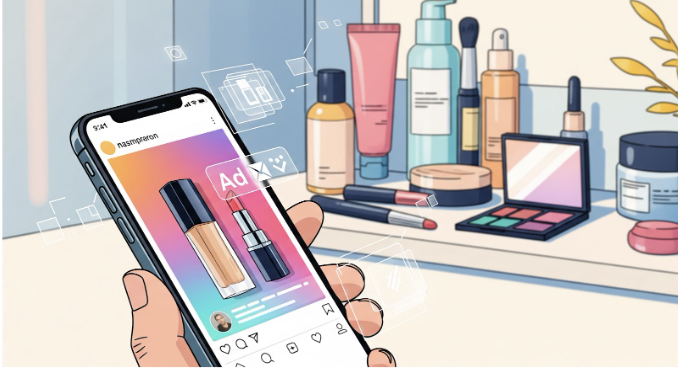
How can brands be impacted by non-compliant influencer posts?
One area that we have seen the need for care is around borderline products and, in particular, the borderline with medicines. Brands need to remember that posts that are ‘Ads’ for the product, and commissioned by the brand, are an extension of brand advertising. So any reference to medicinal benefits could be seen as advertising an unlicensed medicinal product, risking enforcement action by the Medicines and Healthcare products Regulatory Agency. One way to exercise some control over this risk is to provide clear and unambiguous instructions to the influencer about what they can and cannot say about your product. We’ve worked with a number of companies in this position and helped them to put together a clear Do’s and Don’ts brief for their influencers whether they are celebrities, scientists or healthcare professionals. Get in touch if you’d like some help putting together your own influencer brief.
Of course, any non-compliance in advertising also carries a risk of negative publicity for the product or brand involved when enforcement action takes place. In the UK, the Advertising Standards Authority (ASA) regulates online advertisements. The ASA has published clear guidance on how ads must be recognised on social media to protect consumers from undisclosed commercial content. This guidance sets out what influencers need to know before posting ads in order to avoid any enforcement action..
When Content Counts as an Ad
Any time a brand gives an influencer payment, gifts, or another incentive or when an influencer has a commercial connection to a brand, the resulting content counts as advertising and must be disclosed. Also, please be aware that businesses re-sharing a post from an influencer that has no connection with the brand will also be considered as advertising. This is not just best practice, but it falls under the consumer protection law, enforced by the Competition and Markets Authority (CMA) and Trading Standards Services.
Ensure influencer marketing is clear (i.e. Prominent Labels)
The ASA’s guidance makes it clear that ads must be obviously identifiable. Simply tagging a brand or mentioning it in a caption is not enough. The ASA ruled against advertisements with labels such as “sponsored”, “Supported by”, “Funded by”, “Gifted”, “In association with…”, “Thanks to X for making this possible” and ‘Brand ambassador’. They require clear labels such as “Ad,” “Advert,” or “Advertising” which should be placed where audiences can immediately see them, ideally at the beginning of the post.
Take into account technical differences between platforms
The ASA recognises that different platforms have different technical limits, but the core principle remains: consumers must be aware they’re seeing an ad before engaging with the content. This applies across videos, photos, text posts, and affiliate links.
Don’t rely solely on the ‘bio’ or previous posts
Stating in a profile bio that you are an ambassador for a brand does not make a specific post identifiable as an ad. Each individual promotional post must clearly show it is marketing communication on its own.
These principles apply equally to emerging and evolving social media formats, and any advertisement falling within the ASA’s remit must also comply with the CAP Code, including strict rules on misleading claims, harm, and offence. For influencers, compliance with these requirements goes beyond avoiding regulatory action as it is central to maintaining audience trust and safeguarding personal and professional reputation. Influencers have the power to shape opinions and influence purchasing decisions, and with this influence comes responsibility. Influencers must be careful when making misleading claims, unclear disclosures or lacking transparency as it is not only a regulatory responsibility but it can also undermine credibility and damage long-term relationships with followers. By prioritising clear, prominent disclosure and considering the potential impact of content on audiences, influencers can encourage regulatory responsibility, protect consumers, build sustainable relationships with the brands and consumers.
At Bloom, we have helped businesses navigate those challenges efficiently. One key challenge is the pace of those activities - often the brand has to approve a post/influencer story very quickly to keep the momentum. Therefore, we had to develop tools that can be used at the start of the project, such as clear Do’s and Don’ts brief for influencers, whether they are celebrities, scientists or healthcare professionals. Providing those briefs in advance helps the validation process to be efficient and quick. Get in touch if you’d like some help putting together your own influencer brief and risk management process.
Sayali Garud