
Is your campaign as compliant as your product?
Black Friday is approaching, and beauty brands are preparing to compete for attention with promotional emails and social media campaigns. But keep in mind it is easy for a stronger headline or a shortened caption to change the meaning of a carefully approved product claim!
The Committee of Advertising Practice (CAP) recently published a reminder to get Black Friday promotions right. Alongside its wider guidance on beauty advertising and the requirements for cosmetic claims, this provides a useful prompt for brands to review three areas before campaigns go live.
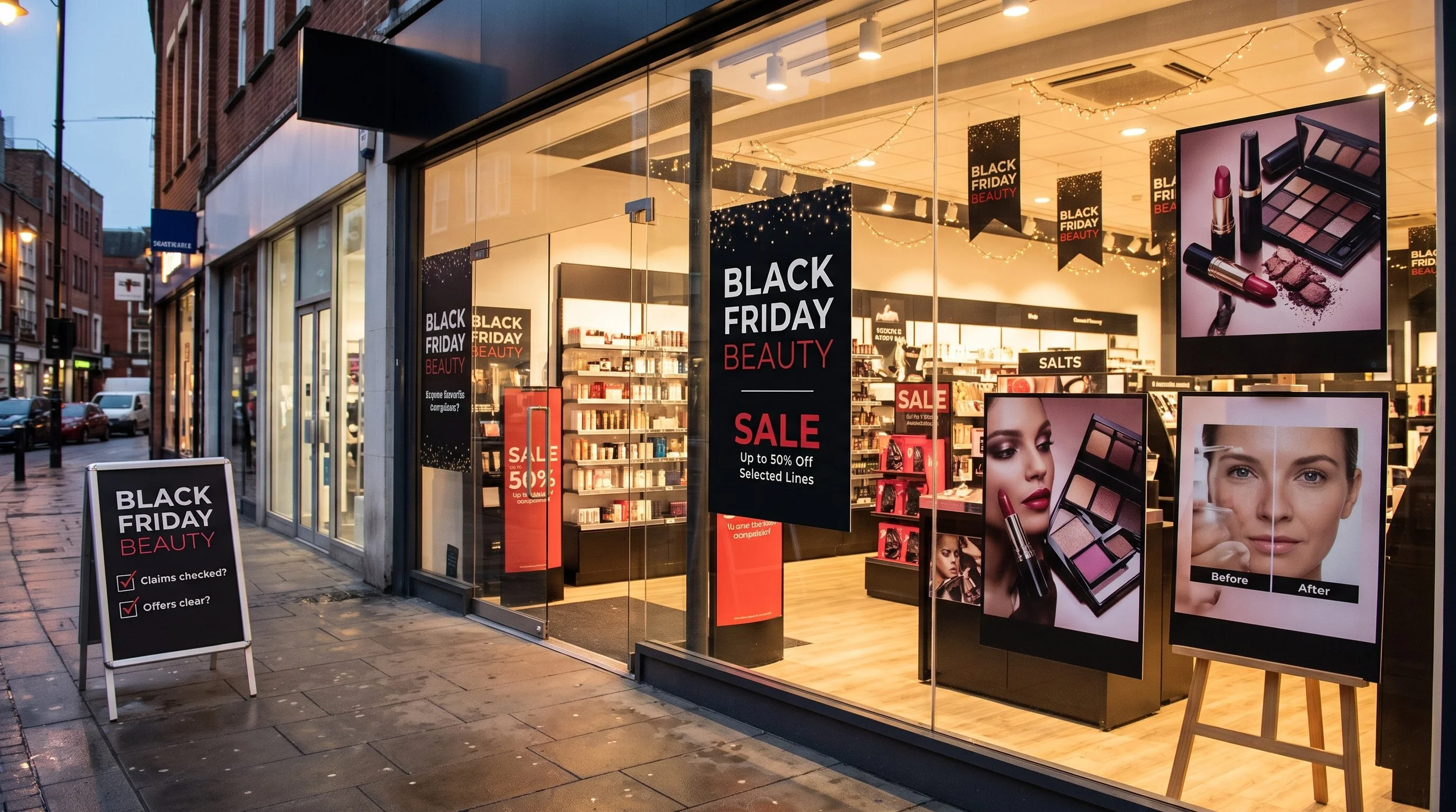
1. Does the evidence support the actual claim?
Review the wording customers will see across your website, emails, social posts and retailer listings. Does it accurately reflect the evidence you hold?
Small wording changes can make a significant difference to what a claim promises and the evidence needed to support it.
Share approved wording with your colleagues so that claims remain consistent as campaign materials are adapted.
2. Are your images making promises too?
Before-and-after photographs, filters and retouching can all influence what consumers believe a product will achieve.
Check whether lighting, styling or editing exaggerates the apparent results. Before-and-after images should represent effects you can substantiate, and a disclaimer will not rescue an otherwise misleading impression. Apply the same scrutiny to visuals as you would to written claims!
3. Is the offer as clear as the headline?
Savings claims must be genuine and supported by evidence. Check the basis of any price comparison and whether headline discounts fairly reflect the promotion.
CAP reminds us:
Claims such as "50% off", "Save £100" or "huge Black Friday savings" must be genuine, accurately reflect the available discount and must not exaggerate the savings consumers can expect to receive.
Particular caution is required where absolute and maximum discount claims are used together. Consumers are likely to interpret a claim such as "Up to 60% Off Everything" to mean that all products within the promotion are discounted, with a significant proportion receiving the maximum 60% reduction.
Advertisers should keep robust evidence to support any comparison, including historical pricing data and sales records. Where comparisons are made against an RRP, marketers should be able to show that it reflects the product's prevailing selling price across the market. Evidence based solely on a manufacturer's website, or a manufacturer's website and a single retailer, is unlikely to be enough where the product is sold more widely.
Make significant conditions clear, including exclusions, minimum spends and relevant availability restrictions. Customers should be able to understand the offer without discovering an important limitation only at checkout.
Your Black Friday campaign represents an investment in sales, visibility and customer trust. Make sure your claims support that investment.
At Bloom Regulatory, we review cosmetic claims and marketing materials, identify potential compliance issues and recommend practical wording that keeps your message compelling. Involving us before launch can help avoid costly rework and give your marketing team confidence in what they publish.
Get in touch to discuss a review of your Black Friday campaign before it goes live.
Amanda Isom