The Evolution of Skincare by Korean Beauty
K-beauty has evolved into a global skincare trend, driven by social media influence and a new growing demand for science-backed formulations. However, as consumer expectations remain towards vegan and ethically aligned beauty, the industry faces new challenges as many of its most effective and recognisable ingredients within the K-beauty market are animal-derived.
The Ingredient Challenge
Korean skincare is known for supporting the skin’s moisture barrier through hydration, radiance, and providing visually smooth texture through newly faced ingredients within the industry.
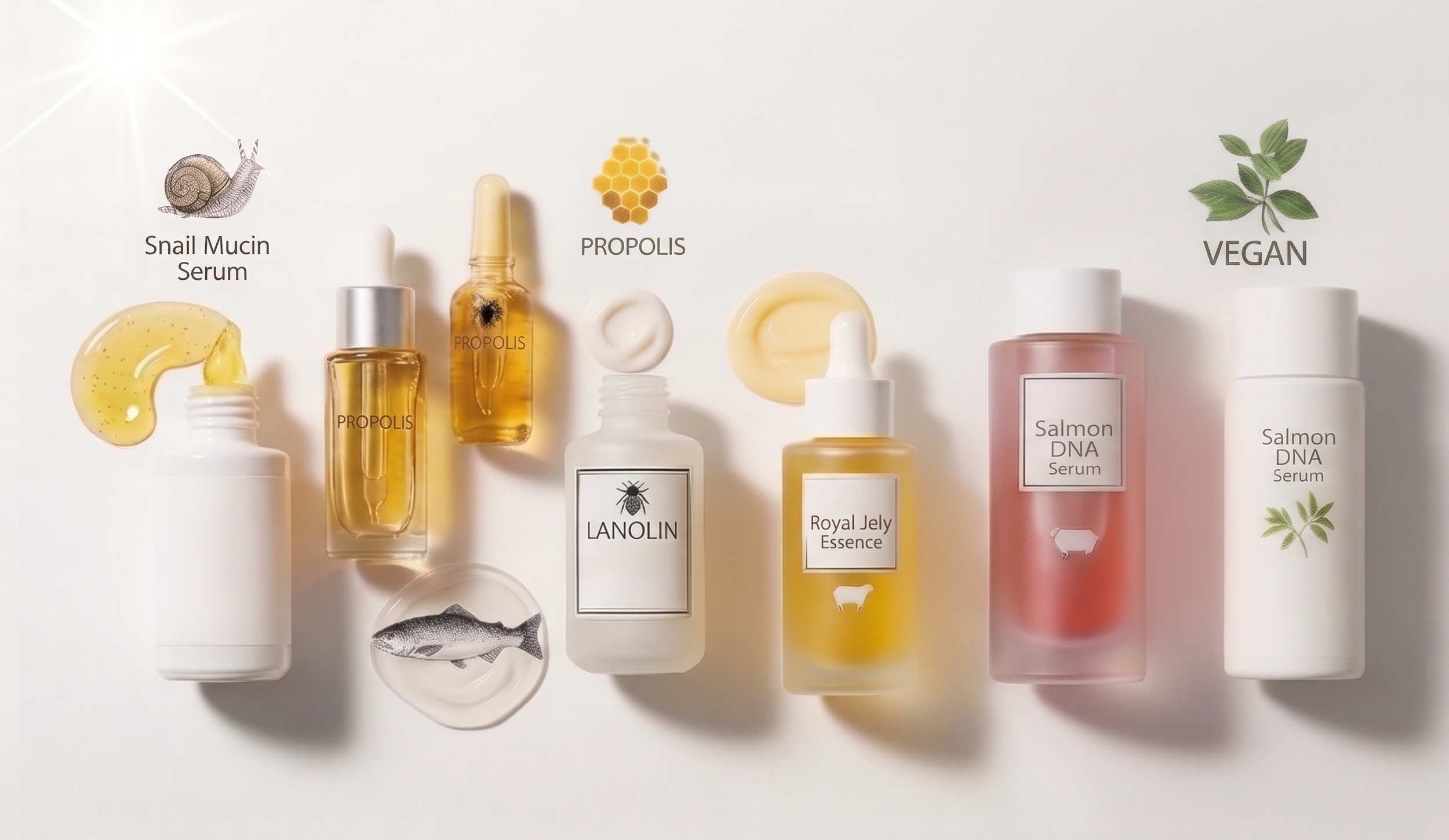
Ingredients such as PDRN (polydeoxyribonucleotide) have been increasingly popular due to scientific research suggesting that it promotes skin cell renewal, smooths the appearance of wrinkles, and provides ‘glass skin glow’. However, PDRN is commonly derived from purified salmon or trout sperm, using the chains of DNA fragments within the skincare.
Other animal-derived ingredients have also become knowingly popular within the Korean skincare trend over the years:
Snail mucin extracted from snails secretion which is known for skin restoring and providing hydration. It also helps with visible skin elasticity and skin texture.
Propolis and royal jelly derived from working honeybees is known for calming and antibacterial benefits while providing hydration and brightening benefits.
Lanolin is derived from sheep wax secreted by the sebaceous glands, which provides occlusive and hydrating benefits.
While Korean skincare has proven highly effective products, its reliance on animal-derived ingredients increasingly clashes with the values of the growing vegan market. To bridge this gap, the K-beauty industry is entering a new phase of innovation focused on ethical sourcing. Brands are now leveraging plant-based extractions and bio-engineered alternatives designed to replicate the performance of traditional, trending ingredients.
As the cosmetics industry continues to innovate, the development of increasingly sophisticated formulations and performance-driven products is creating new regulatory challenges. In particular, brands are facing heightened scrutiny regarding the substantiation of efficacy claims, with regulators expecting robust, scientifically sound evidence supported by appropriate testing methodologies and protocols.
At the same time, companies must carefully manage how these products are positioned and marketed. While innovation often seeks to deliver highly visible or biologically active effects, claims must remain firmly within the scope of cosmetic legislation. Overstated or medically oriented claims may inadvertently shift a product into borderline or medicinal territory, triggering significantly more stringent regulatory requirements.
As a result, businesses are required not only to invest in stronger scientific substantiation strategies, but also to ensure close alignment between product development, regulatory assessment, and marketing communications in order to mitigate both compliance and classification risks.
Bloom’s Key Tips for Brands Taking Inspiration from the K-Beauty Industry for the EU and UK:
Ensure that all skincare formulations are clearly classified as cosmetic products and comply fully with both EU and UK cosmetic regulations, including all applicable labeling and safety requirements.
All efficacy and performance claims must be strictly compliant and substantiated by robust scientific data prior to product marketing.
Any vegan or vegetarian claims must be substantiated either via formally approved recognised certification bodies or a rigorous supply-chain audit of all raw materials.
How can Bloom help?
With expertise in skincare regulation across the EU and UK, Bloom helps beauty and wellness brands innovate responsibly, ensuring every cosmetic product is safe, compliant, and trusted by consumers.
In addition to our standard compliance services, as experts in the area of product claims, our team can review your skincare claims and ensure they are evidence-based, compliant, and in line with the latest guidance and regulatory requirements. Additionally, as the skincare industry evolves with developing ingredients, we can advise on formulation compliance and claim positioning to help brands bring innovation to the market confidently.
Get in touch if you’d like to discuss your project with us.
Darshni Pattani