Formulations, Actives, and Borderline Risks
Korean skincare has evolved from a viral trend into a global formulation standard, inspiring brands worldwide to adopt its lightweight, barrier-first hydration architectures. However, replicating K-Beauty’s results and active led messaging requires careful navigation of regulatory boundaries.
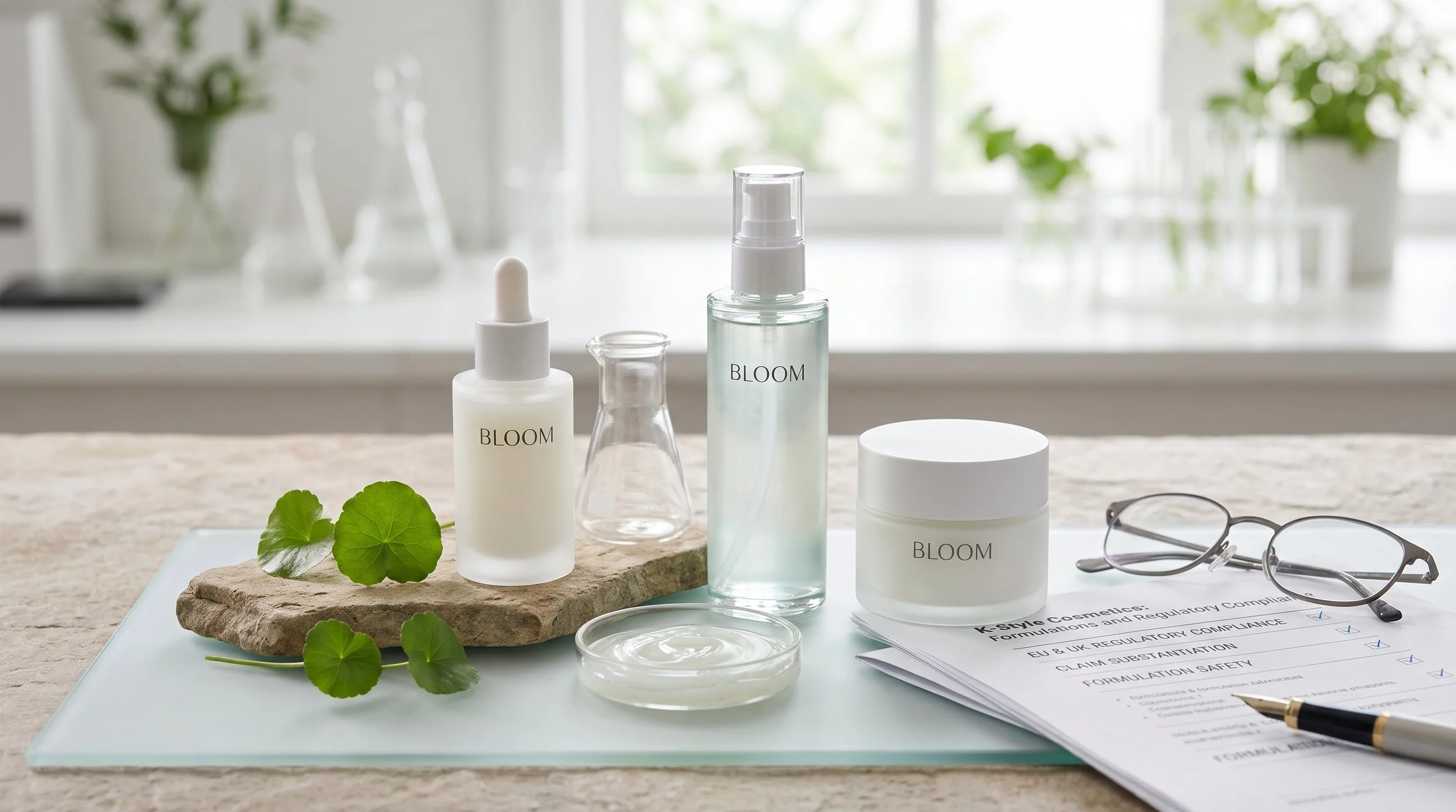
Over recent years, Korean skincare has evolved from a viral regional trend into a global market force. It has been driven by consumer demand for “glass skin” and multi-step hydration routines; K-Beauty’s influence is anchored by its mastery of barrier-focused formulations, unique sensory experiences, and strategic claim positioning.
The commercial opportunity is to turn the appeal of “glass skin” into a clear, credible reason to buy. For an individual product, that might mean focusing on hydration, smoother-looking skin or visible radiance. Identifying the benefit that matters most to your customers gives formulation, testing and marketing teams a shared brief, helping focus investment on the promise you want the product to deliver.
Korean formulators have pioneered exceptional ways to present emulsions, milky toners, and gel-creams that deliver key ingredients like ceramides, cholesterol, and Centella Asiatica to the skin to maintain the barrier without the greasy and sticky effects of traditional occlusives. Korean beauty has successfully framed barrier maintenance as a cosmetic protection function rather than a medicinal therapeutic benefit or claim. One particular challenge lies in distinguishing cosmetic skin benefits from claims that may imply a medicinal purpose. While claims relating to hydration, maintaining skin in good condition or improving its appearance can fall within the cosmetic framework, references to tissue regeneration, treating inflammation or repairing pathological skin damage may raise classification concerns. For example, the distinction between supporting the skin's natural barrier and claiming to treat an impaired skin barrier is not simply a matter of wording. The product's intended purpose, composition, mode of action and overall presentation must be considered when assessing its regulatory classification. This is particularly relevant where innovative ingredients are promoted using scientific terminology or evidence originally developed in therapeutic contexts.
Beyond traditional barrier-supporting ingredients, K-Beauty is increasingly associated with innovative ingredients and technologies, including PDRN, peptides and exosome-based concepts. While these developments create exciting opportunities for cosmetic innovation, they also raise important regulatory questions for brands seeking to enter the EU and UK markets. Ingredient identity, origin, composition, safety data and intended function must all be carefully assessed. The use of an ingredient in an established Korean skincare product does not automatically establish its regulatory suitability in another market. Early assessment can help brands identify potential restrictions, safety data gaps and classification issues before committing to product development and launch.
Skincare brands are increasingly replicating Korean skincare as their inspiration for the new product development and enhancing the ideology of ‘glass-like’ skin based on other trends and actives commonly used within the specific desired market. However, using the same technology and associated claims to K-Beauty may be a regulatory challenge as companies must carefully manage how these products are positioned and marketed. Additionally, brands are facing heightened scrutiny regarding the substantiation of efficacy claims, with regulators expecting robust, scientifically sound evidence supported by appropriate testing methodologies and protocols. Another important consideration is the relationship between ingredient-level research and finished-product claim substantiation. Scientific evidence demonstrating the benefits of an individual ingredient cannot automatically be extrapolated to a finished cosmetic formulation. The ingredient's concentration, formulation environment and conditions of use may influence the relevance of the available evidence. Brands must therefore ensure that claims relating to hydration, skin barrier support or visible improvements in skin appearance are supported by evidence appropriate to the finished product and the specific benefit communicated. A proportionate, evidence-based approach to claims assessment can help brands make effective use of existing scientific data while identifying where additional testing or substantiation may be needed.
While innovation and inspiration from the K-Beauty industry often seeks to deliver highly visible or biologically active effects, claims must remain firmly within the scope of cosmetic legislation. Exaggerating claims towards the medical scope can lead to scrutiny for the brand, reputational risks and, in worst case scenarios, enforcement action. As a result, new innovations must ensure close alignment between product development, regulatory assessment, and marketing communications in order to mitigate both compliance and classification risks.
These decisions are best made before testing is commissioned and packaging is finalised. Reviewing priority claims early helps brands establish what their existing evidence supports and where further work would add value. Discovering late in development that a central claim needs changing can mean additional testing, revised artwork and a weaker launch message. Bringing regulatory advice into the product brief helps protect both the development budget and the product’s intended point of difference.
Bloom’s Key Tips for Brands Taking Inspiration from the K-Beauty Industry for the EU and UK:
1. Assess innovative ingredients before transferring Korean formulations to EU and UK markets.
Verify ingredient identity, composition, applicable restrictions and available safety information. Do not assume that an ingredient used in Korea is automatically suitable for an EU or UK formulation.
2. Distinguish cosmetic benefits from medicinal positioning.
Examine the product's intended purpose and overall presentation, particularly where claims refer to skin repair, inflammation, regeneration or dermatological conditions. Claim assessments must be done carefully to avoid any borderline or medical language that can trigger reclassification, whilst ensuring all claims are cosmetic in nature and supported by substantiation appropriate to the product’s cosmetic purpose
3. Align claim substantiation with the finished formulation.
Ensure that the available evidence supports the benefit communicated to consumers, rather than relying solely on ingredient-level studies or supplier marketing materials.
4. Involve regulatory specialists early in innovation.
Consider regulatory requirements when selecting ingredients, establishing product benefits and designing efficacy studies, rather than waiting until the packaging approval stage.
How can Bloom help?
With expertise in skincare regulation across the EU and UK, Bloom helps beauty and wellness brands innovate responsibly, ensuring every cosmetic product is safe, compliant, and trusted by consumers.
In addition to our standard compliance services, as experts in the area of product claims, our team can review your skincare claims and ensure they are evidence-based, compliant, and in line with the latest guidance and regulatory requirements. Additionally, as the skincare industry evolves with developing ingredients, we can advise on formulation compliance and claim positioning to help brands bring innovation to the market confidently.
Developing a K-Beauty-inspired product or range? Speak to Bloom early to align your formulation, claims and supporting evidence with your launch ambitions.
Darshni Pattani